
On Deepening at Home: How Our Relationship With Home Changes Over Time
By Jessica Forman

It’s easy to believe that the way we live in our homes is simply who we are.
The cluttered corner.
The half-finished projects.
The rhythms of care we keep—or don’t.
Over time, these patterns can harden into something that feels like personality. Like fate. As though our relationship with home were fixed rather than alive, shaped once and then set.
My life has shown me otherwise.
Yes, I have tendencies. But more than tendencies, I have habits—and habits are the cloak we weave from our priorities. Sometimes threadbare, sometimes richly embroidered. Priorities, hidden or plain, known or unknown, decide what we notice, what we tend, and what we leave untouched.
Attention Follows Priority
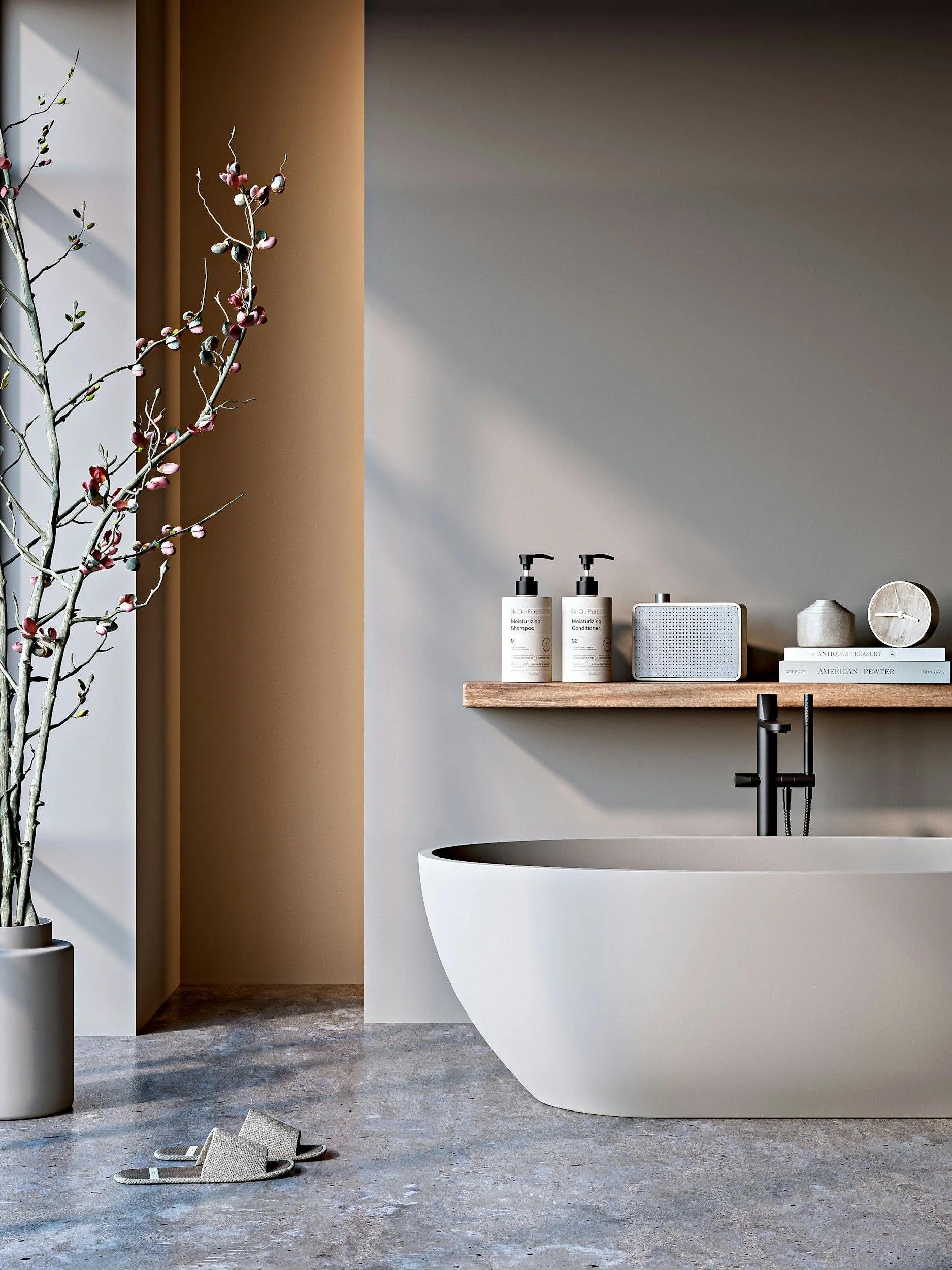
In my early twenties, a roommate mentioned a bath mat—either she’d bought a new one or couldn’t find the old. I still don’t know which. My only response was, “What bath mat?”
I genuinely had no idea whether we had one. I had stepped over that damp rectangle every day for months and never registered its color, its frayed edges, or its absence.
At the time, my attention lived elsewhere. My nervous system was stretched thin—pulled outward, inward, everywhere but settled. Home care wasn’t a moral failure or a lack of discipline. It was a reflection of capacity. And mine was not robust.
How Our Homes Reflect What We Can Hold

Nearly twenty years later, the story is different.
Not because I resolved to become someone new, but because my system changed. As I grew more resourced, more grounded, more able to tolerate presence, my field of attention widened. What once filtered out now registers. What once felt neutral now quietly asks for care.
On my ongoing somatic home journey, this deepening continues. I keep discovering new expressions of care that match who I am becoming and the season I am in.
Recently, a more refined level of cleaning appeared—effortlessly, the way the next layer of an onion reveals itself only after the outer one has softened and released.
This feels worth naming clearly:
We are not stuck being one way forever.
Capacity changes over time. And our homes reflect that change.
When Care Becomes Muscle Memory
Something subtler also happens beneath habit—something held in the body.
For years, the stack of clean dishes sat like a quiet accusation, slowing everything down. Not because I didn’t care, but because my body hadn’t yet learned the shape of the task, its rhythm.
Then, slowly, through repetition, something shifted.
One day my hands moved toward the cupboard before my mind caught up—no negotiation, no sigh. Just the soft clink of plates finding their place.
This is muscle memory. This is embodied care.
Sweeping has changed too. It no longer feels like a chore I assign myself. It feels like a natural expression of being home—of being in relationship with my space. A way my body says, I live here.
Care becomes embodied before it becomes conceptual. The body learns safety, rhythm, and belonging first. The mind follows.
Care Across Seasons of Life

Capacity expands and contracts across seasons of life. There are times when tending a home feels spacious and satisfying—and times when simply keeping everyone fed and rested is the entire work.
Parenting, especially, rearranges the landscape. Toys underfoot. Laundry that never quite empties. Crumbs that reappear moments after sweeping. Seasons when the house lives perpetually on the edge of overflow.
In those seasons, care looks different.
Sometimes care is a clear path through the living room so small feet don’t trip.
Sometimes it’s clean sheets, even if the rest is chaos.
Sometimes it’s one wiped surface at the end of a long day.
These are not failures. They are successes, scaled to reality.
Our nervous systems shape everything here. When we are depleted or dysregulated, capacity collapses. Attention narrows. Care shrinks. And shame only tightens the system further, making presence harder to reach.
An Invitation, Not a Demand

Yet something else is also true.
Our homes respond to us.
The smallest gestures—a swept floor, a cleared counter, a moment of noticing light on the wall—are not demands for perfection. They are invitations. Ways of entering into relationship rather than enforcing order.
The more attention we offer, the more we value our spaces.
The more we value them, the more they come alive.
Over time, care becomes less a task and more a conversation—shaped by readiness, season, and nervous system capacity. We offer what we can. The home meets us there.

Deepening Over Time
Over time, this kind of noticing begins to change how you relate to your space. Decisions become quieter and more intuitive. You place things where your body naturally reaches for them. You let go of what creates friction and make room for what supports your daily flow.
Your home becomes less something to manage and more something that supports how you live. Small adjustments follow naturally, grounded in awareness rather than pressure. When you pay attention to what your home says about you, change tends to arrive gently—and stay.
Our homes are not static containers.
They are living environments, breathing alongside us.
As our relationship with home evolves, care deepens gently—one season at a time, one small gesture at a time, one quiet success at a time—until tending a space feels less like effort and more like coming home to ourselves.
Take a moment today to notice one small gesture in your home. See what it tells you about the life you’re living—and allow yourself to meet it with care.
